Peran Penting dan Manfaat Crossover dalam Sistem Audio
Dalam arsitektur loudspeaker, crossover berfungsi sebagai otak sistem, mengatur distribusi sinyal listrik yang kompleks. Tujuan utamanya adalah membagi sinyal audio full-range yang masuk ke dalam rentang frekuensi tertentu, memastikan bahwa setiap transduser - baik woofer, midrange, maupun tweeter - hanya menerima frekuensi yang memang dirancang untuk direproduksi secara efisien.
Pembagian ini memberikan beberapa manfaat performa yang krusial. Dengan menyaring frekuensi di luar rentang optimal driver, crossover secara signifikan meningkatkan penanganan daya; sebagai contoh, ia mencegah sinyal frekuensi rendah berenergi tinggi mencapai dan merusak tweeter frekuensi tinggi yang sensitif. Selain itu, crossover meminimalkan distorsi dengan menjaga driver tetap berada dalam batas ekskursi linier mereka dan menjauh dari area yang rentan resonansi atau mode cone breakup. Pada akhirnya, crossover bertanggung jawab untuk mengoptimalkan respons frekuensi keseluruhan dan penyelarasan fase dari sistem. Bagi perakit DIY dan teknisi audio yang menggunakan Speaker Box Lite, memahami jaringan ini adalah langkah pertama dalam mencapai transisi yang mulus antar driver serta karakter suara yang seimbang dan profesional.
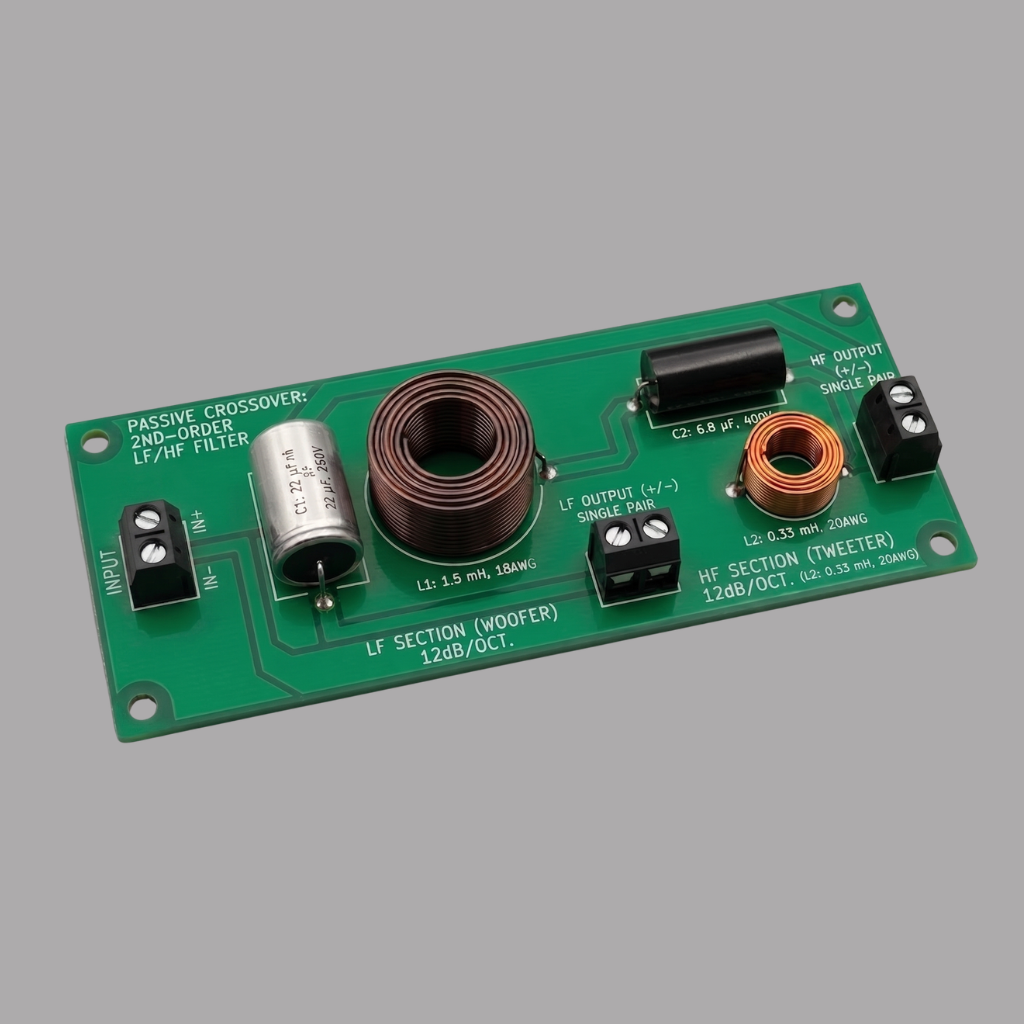
Tata letak dasar jaringan crossover LF-HF dua-jalur
Komponen Utama - Pembagian Frekuensi Fundamental
Di jantung setiap jaringan crossover terdapat dua blok pembangun fundamental: filter low-pass dan high-pass. Sirkuit utama ini bertanggung jawab untuk menetapkan "titik crossover" - frekuensi spesifik di mana sinyal dibagi dan diteruskan dari satu driver ke driver lainnya. Transisi ini memastikan bahwa setiap komponen beroperasi dalam rentang yang paling linear sambil mempertahankan suara keseluruhan yang kohesif. Dengan menentukan batas-batas frekuensi ini secara tepat, perancang dapat mencegah driver kesulitan dengan frekuensi yang tidak dapat mereka reproduksi secara efisien, meletakkan landasan penting bagi sistem pengeras suara yang seimbang dan andal.
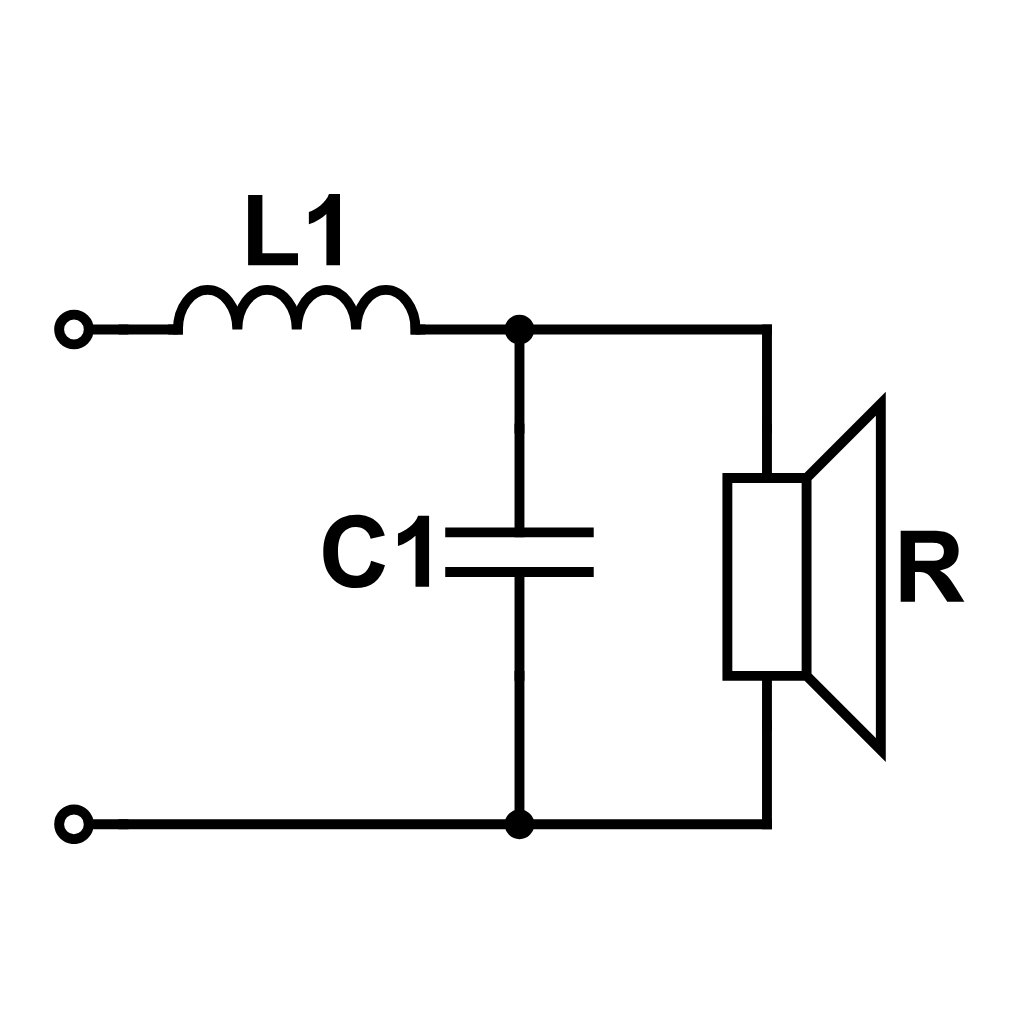
Filter Low-Pass (LF) untuk Woofer
Skema rangkaian filter crossover low-pass (LF) orde ke-2
Filter low-pass (LF) adalah komponen penting yang dirancang untuk mengarahkan energi sinyal, memungkinkan frekuensi rendah mencapai woofer sambil secara bertahap melemahkan frekuensi yang lebih tinggi. Dengan meredam konten frekuensi tinggi yang secara fisik tidak mampu ditangani oleh woofer, filter ini mencegah "cone breakup" - sebuah fenomena di mana diafragma driver kehilangan kekakuan struktural dan menghasilkan distorsi non-linear yang kasar. Selain itu, pemfilteran ini mengurangi distorsi intermodulasi (IMD), memastikan woofer tetap berada dalam rentang operasi optimalnya tanpa membuang energi pada frekuensi yang tidak dapat direproduksinya dengan akurat.
Speaker Box Lite menawarkan fleksibilitas yang luas untuk merancang sirkuit-sirkuit ini, mendukung slope filter dari orde ke-1 hingga orde ke-6. Insinyur dapat memodelkan sistem mereka secara presisi menggunakan berbagai penyelarasan filter, termasuk Butterworth untuk respons passband-nya yang sangat datar atau Linkwitz-Riley, yang sangat dihargai karena penyelarasan fase yang superior dan penjumlahan yang rata pada titik crossover.
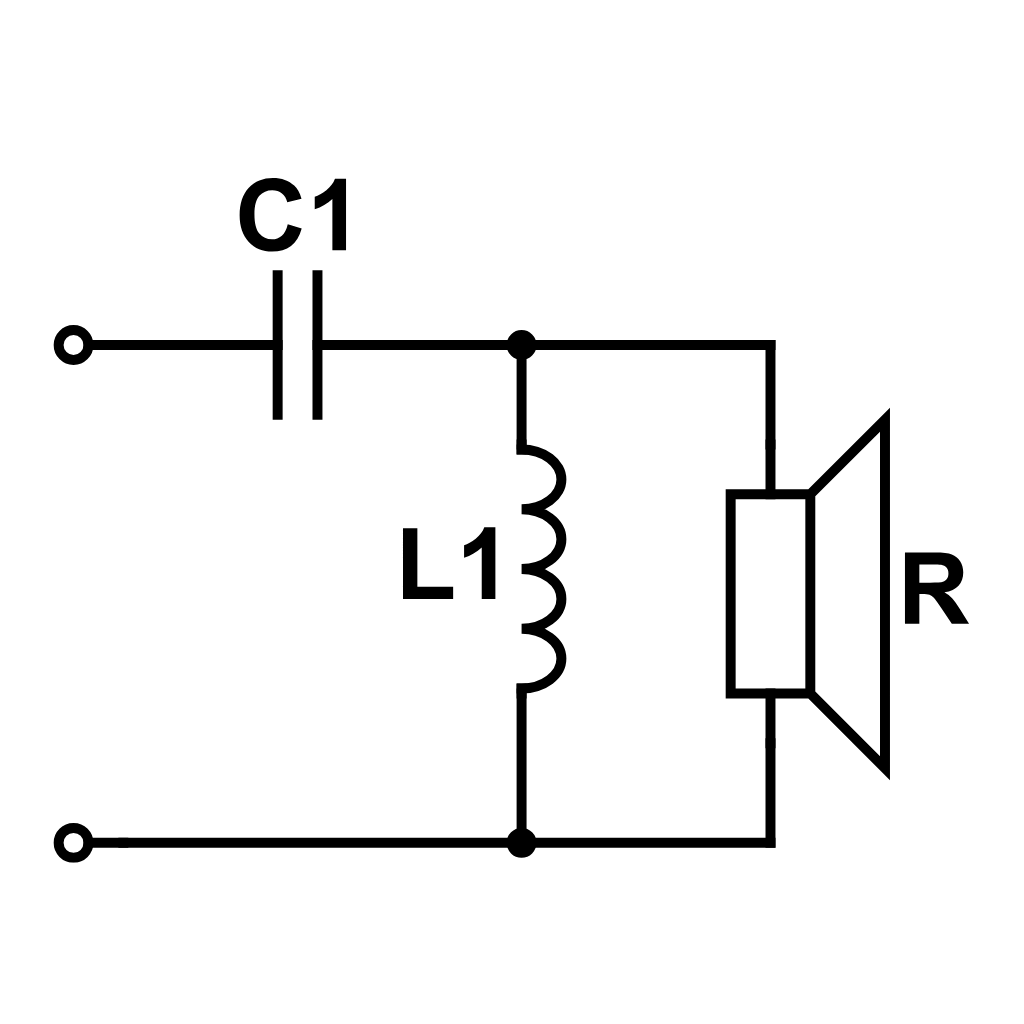
Filter High-Pass (HF) untuk Tweeter
Skema rangkaian filter crossover high-pass (HF) orde ke-2
Filter high-pass (HF) berfungsi sebagai pelindung utama bagi komponen paling sensitif dalam sistem Anda - tweeter. Fungsi utamanya adalah memblokir energi frekuensi rendah yang dapat berakibat fatal bagi driver kecil. Karena tweeter memiliki voice coil yang ringan dan ekskursi mekanis yang sangat terbatas, paparan sinyal bass dengan panjang gelombang panjang menyebabkan distorsi seketika dan potensi kerusakan fisik. Tanpa filter HF yang memadai, tweeter akan mencoba mereproduksi frekuensi yang tidak sanggup ditanganinya, sehingga memicu kegagalan termal atau "bottoming out" mekanis.
Di dalam Speaker Box Lite, pengguna dapat mengonfigurasi filter high-pass mulai dari kemiringan orde ke-1 yang landai (6dB/oktaf) hingga orde ke-6 yang curam (36dB/oktaf). Filter orde lebih tinggi memberikan perlindungan unggul dengan meredam sinyal di luar pita frekuensi secara cepat, yang sangat penting untuk menjaga penanganan daya yang tinggi dan kejernihan suara. Memilih kemiringan yang tepat memastikan tweeter tetap berada dalam rentang operasi liniernya, bebas dari beban energi frekuensi rendah.
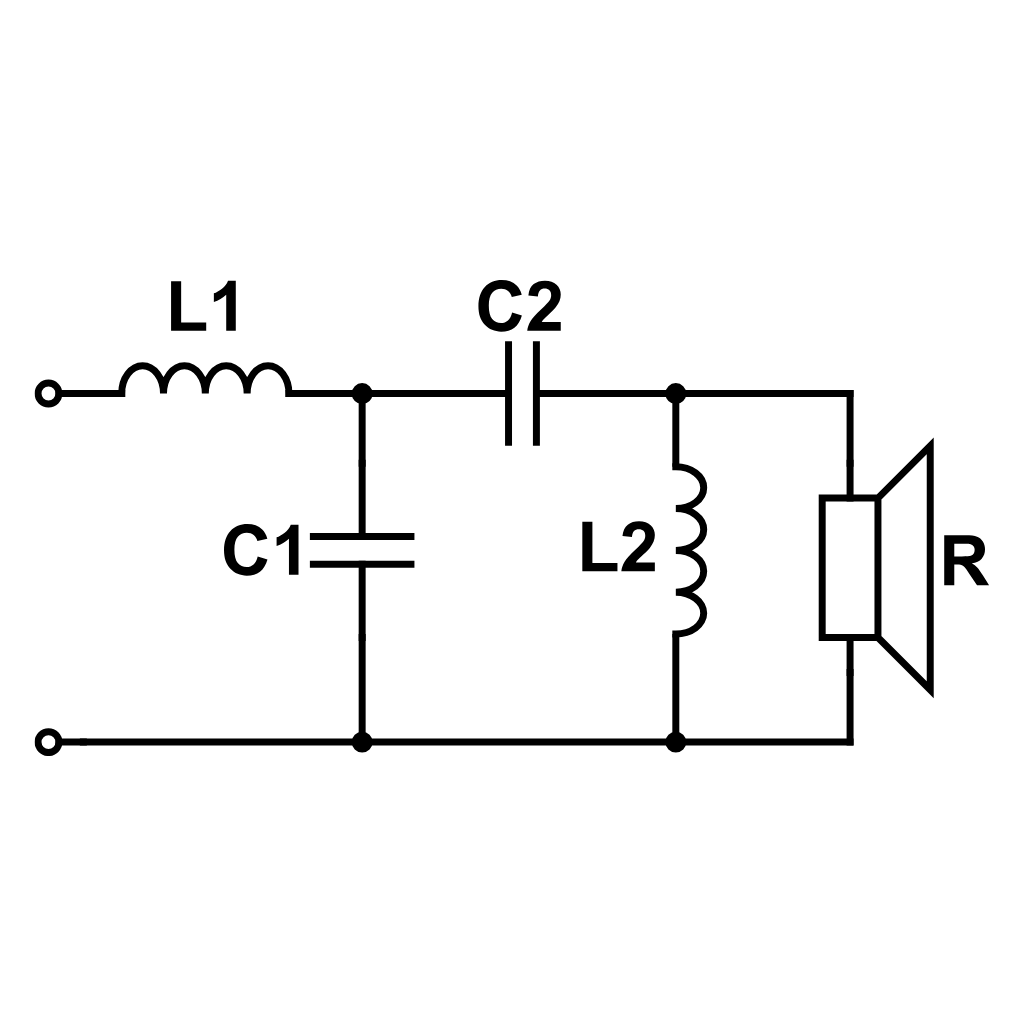
Filter Band-Pass - Mengimplementasikan Driver Midrange dan Midbass
Skema rangkaian filter crossover band-pass orde ke-2
Dalam desain pengeras suara 3-way atau 4-way yang kompleks, driver tertentu dioptimalkan untuk menangani hanya bagian tertentu dari spektrum frekuensi. Di sinilah filter band-pass menjadi sangat penting. Dengan "mengapit" filter high-pass dan filter low-pass secara bersamaan, Anda menciptakan jendela frekuensi khusus yang mengisolasi rentang operasional unit midrange atau midbass.
Bagian high-pass dari filter menghilangkan energi bass dalam yang dapat menyebabkan ekskursi berlebih (over-excursion), sementara bagian low-pass memotong frekuensi tinggi di mana driver mungkin menunjukkan cone breakup atau dispersi luar sumbu yang buruk. Di Speaker Box Lite, merancang filter band-pass memungkinkan Anda menentukan titik-titik potong crossover ini dengan presisi. Hal ini memastikan unit midrange beroperasi dalam rentang yang paling linier, sehingga secara efektif mengurangi distorsi intermodulasi. Teknik "windowing" ini adalah kunci untuk mencapai suara yang seimbang dan alami dalam sistem multi-driver, memberikan transisi yang mulus antara woofer yang bertenaga dan tweeter yang sensitif.
Rangkaian Pendukung - Penyetelan Presisi dan Koreksi Driver
Meskipun filter standar mengatur pembagian frekuensi, perhitungan dasar crossover sering kali mengasumsikan beban resistif yang konstan. Kenyataannya, driver pengeras suara adalah transduser kompleks dengan sifat induktif dan resonansi mekanis. Perilaku dunia nyata ini dapat menyebabkan kemiringan filter yang tidak terprediksi atau artefak sonik yang kasar. Untuk mengatasi hal ini, teknisi audio menggunakan rangkaian pendukung - jaringan korektif khusus yang dirancang untuk melinearkan perilaku driver. Komponen-komponen ini melampaui sekadar pembagian sinyal sederhana untuk memaksa driver bertindak sebagai beban yang dapat diprediksi. Dengan mengompensasi kenaikan impedansi atau meredam puncak yang sempit, rangkaian ini memastikan crossover utama beroperasi tepat sesuai rencana.
Rangkaian Zobel - Kompensasi Impedansi
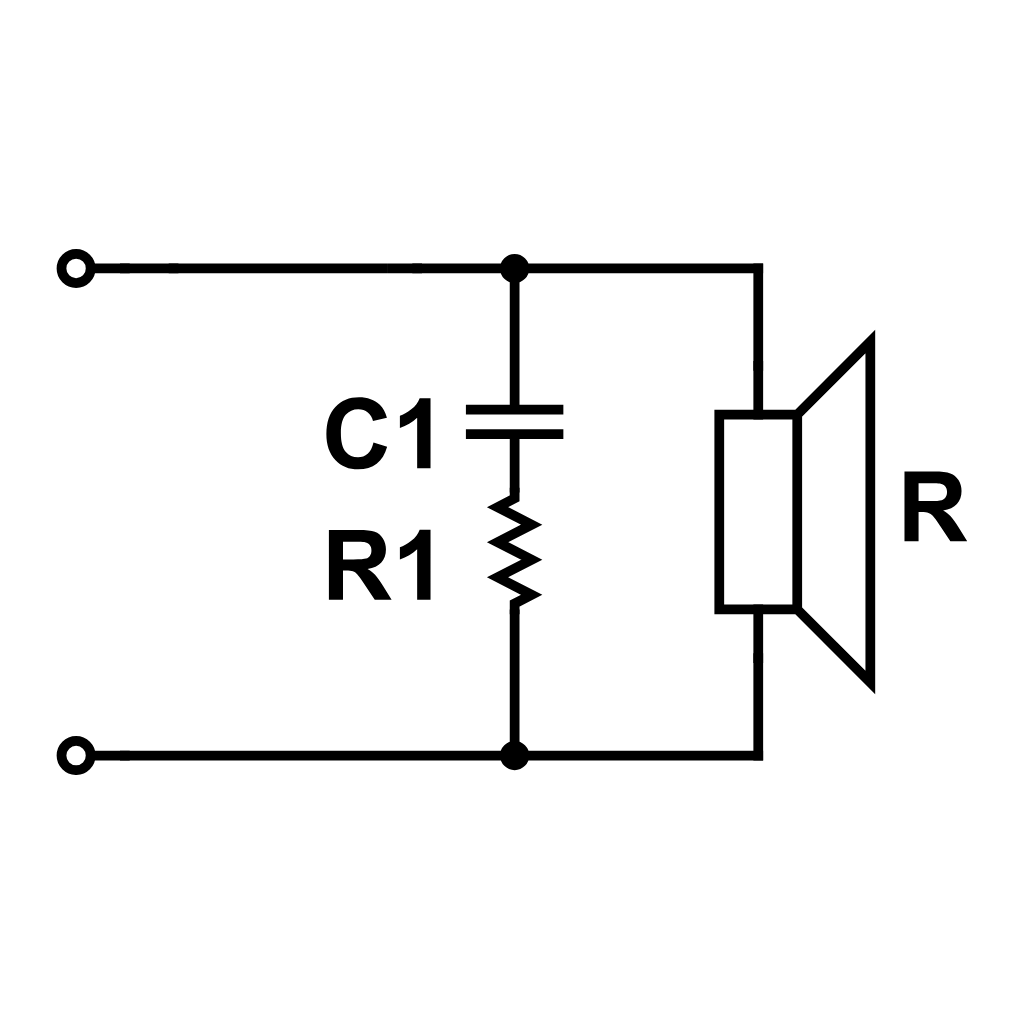
Skema rangkaian Zobel untuk kompensasi impedansi driver
Kumparan suara pengeras suara bersifat induktif secara alami, yang berarti impedansinya meningkat secara signifikan seiring dengan bertambahnya frekuensi sinyal. Perilaku ini bermasalah karena filter crossover standar dirancang untuk bekerja pada beban resistif yang konstan. Jika impedansi berfluktuasi, frekuensi turnover dan kemiringan (slope) filter akan menyimpang dari desain yang diinginkan. Untuk mengatasinya, teknisi menggunakan rangkaian Zobel - sebuah resistor dan kapasitor yang dihubungkan secara seri dan dipasang secara paralel dengan driver. Rangkaian ini menetralkan kenaikan induktansi untuk meratakan kurva impedansi, guna memastikan crossover bekerja sesuai prediksi di seluruh rentang frekuensi.
Filter Notch Seri - Menjinakkan Puncak Resonansi Sempit
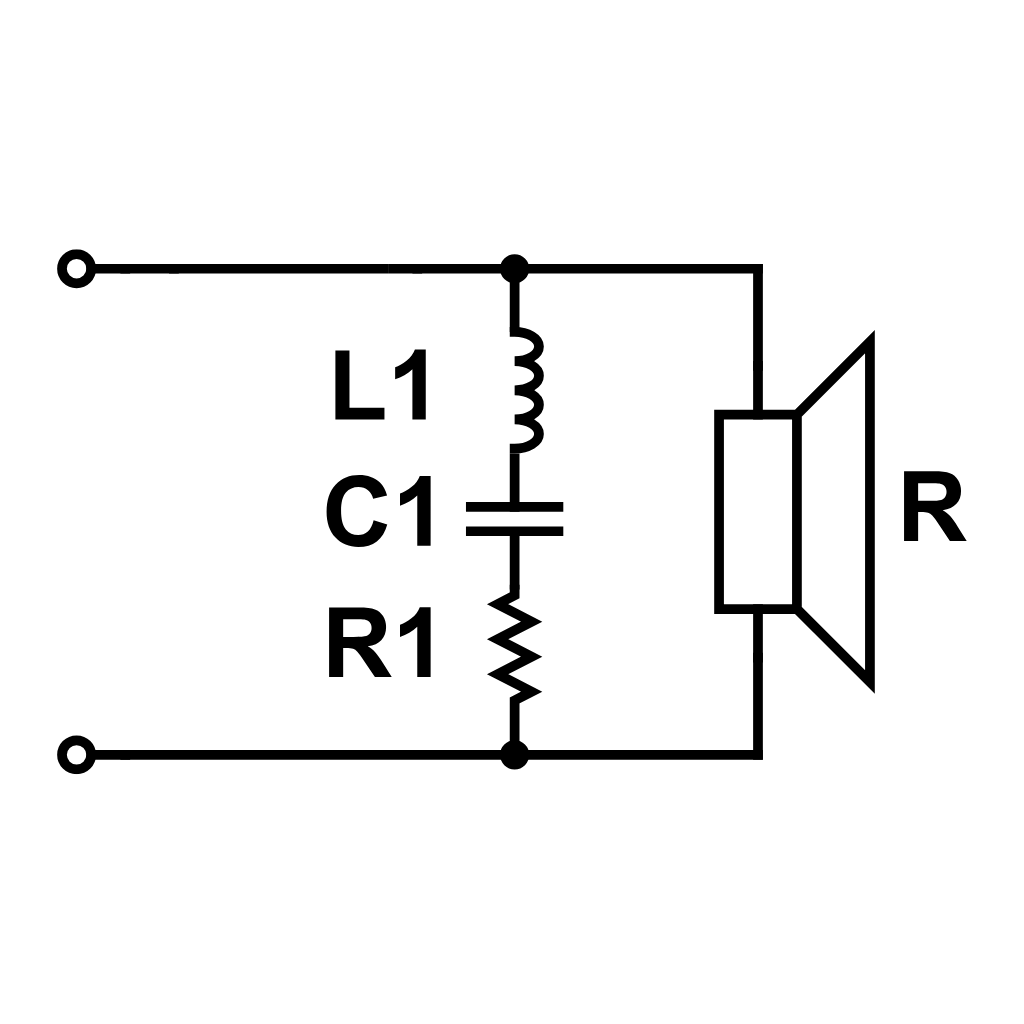
Skema rangkaian filter notch seri untuk penekanan puncak resonansi pita sempit
Filter notch seri adalah alat presisi yang digunakan untuk menekan puncak frekuensi pita sempit tertentu, yang sering disebabkan oleh break-up konus driver atau dering mekanis. Dengan menyusun induktor, kapasitor, dan resistor dalam konfigurasi seri dan menempatkannya secara paralel dengan driver, Anda menciptakan sirkuit yang menargetkan rentang frekuensi yang tepat. Nilai spesifik dari induktor dan kapasitor menentukan frekuensi tengah dari notch, sementara resistor mengontrol kedalaman atenuasi. Konfigurasi ini secara efektif mengalihkan energi yang tidak diinginkan, menghilangkan resonansi kasar untuk menghasilkan respons frekuensi yang lebih halus dan suara yang lebih alami.
Filter Notch Paralel - Penekanan Resonansi Mekanis
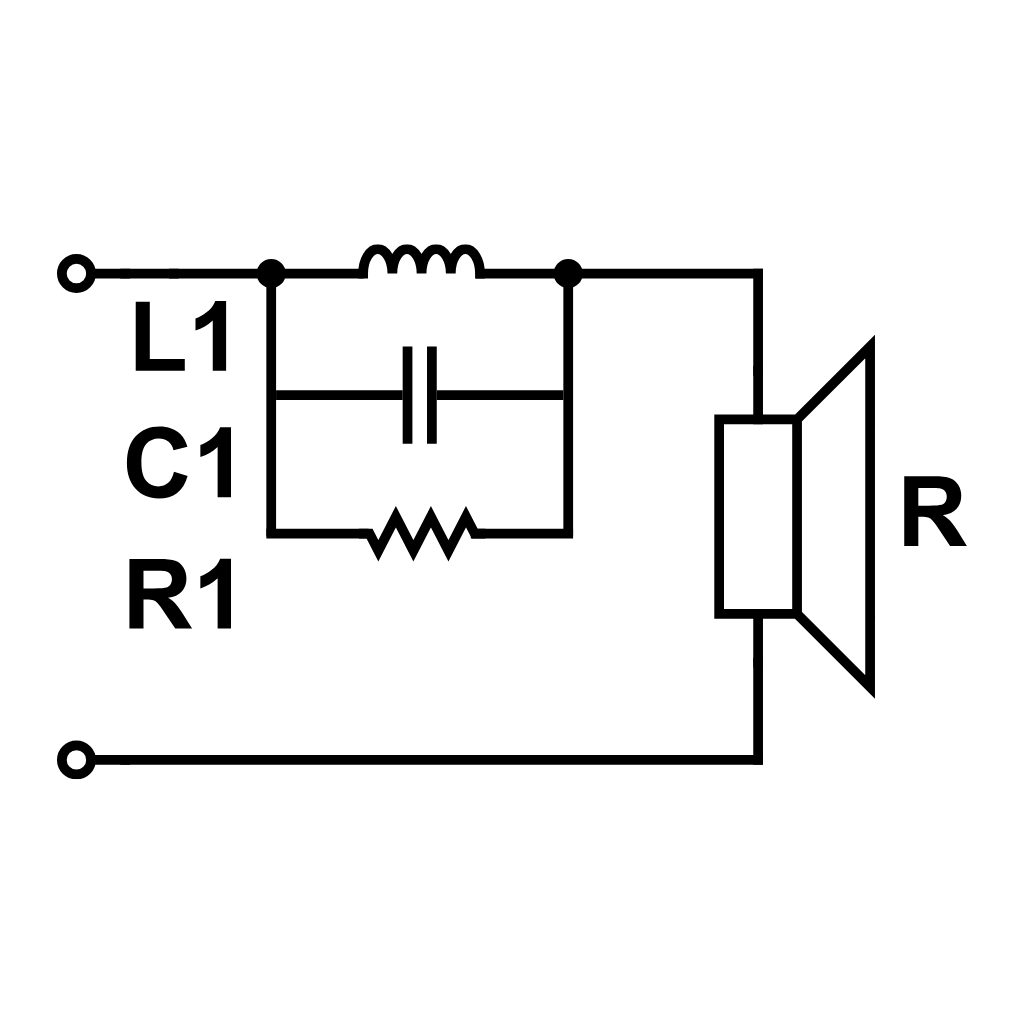
Skema filter notch paralel - jaringan RLC untuk penekanan resonansi mekanis
Filter notch paralel menargetkan frekuensi resonansi mekanis (Fs) dari driver. Pada frekuensi ini, impedansi biasanya melonjak, yang dapat mengganggu kemiringan crossover dan menyebabkan ringing yang terdengar. Sirkuit ini - yang terdiri dari induktor, kapasitor, dan resistor - dipasang secara paralel dengan driver untuk meratakan puncak tersebut. Hal ini sangat krusial untuk tweeter ketika titik crossover diatur di dekat Fs. Dengan menghaluskan kurva impedansi, filter ini memastikan driver tetap berada dalam rentang operasi linearnya, mencegah distorsi dan melindungi komponen dari tekanan mekanis selama pemutaran output tinggi.
Rangkaian Kontur RL/RC untuk Pembentukan Respons
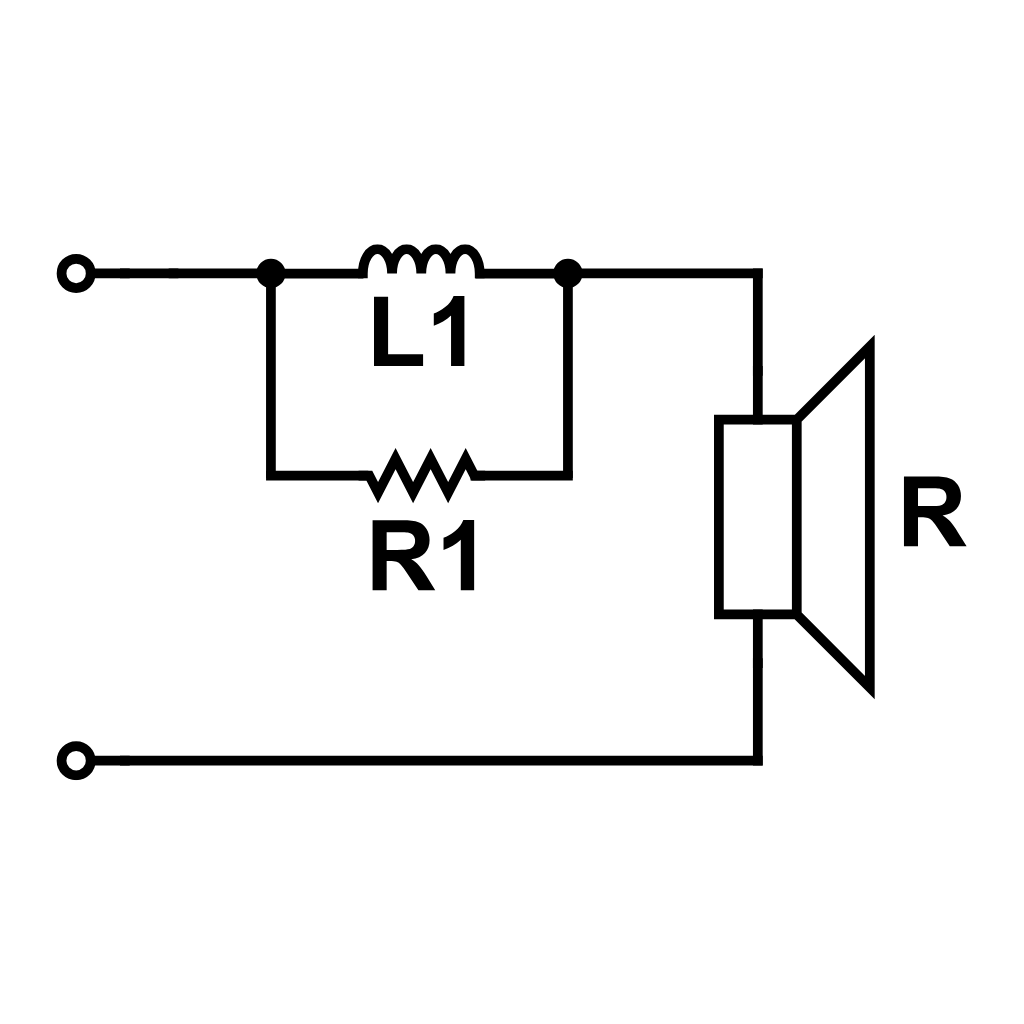
Skema rangkaian kontur RL untuk pembentukan respons frekuensi dan kompensasi baffle step
Rangkaian kontur - termasuk jaringan RL dan RC - berfungsi sebagai alat utama untuk melakukan "voicing" pada speaker. Berbeda dengan filter notch yang menargetkan puncak sempit, rangkaian ini membentuk rentang frekuensi yang luas untuk menyeimbangkan respons tonal secara keseluruhan. Penerapan yang umum adalah Baffle Step Compensation (BSC), di mana rangkaian RL digunakan untuk mengatasi hilangnya energi frekuensi rendah yang disebabkan oleh dimensi fisik kabinet. Hal ini memulihkan nada rendah, mencegah suara yang terdengar tipis. Selain itu, rangkaian kontur dapat meredam midrange yang terlalu tajam atau menonjol, memastikan transisi musikal yang halus antar driver.
Atenuator L-Pad untuk Penyesuaian Level
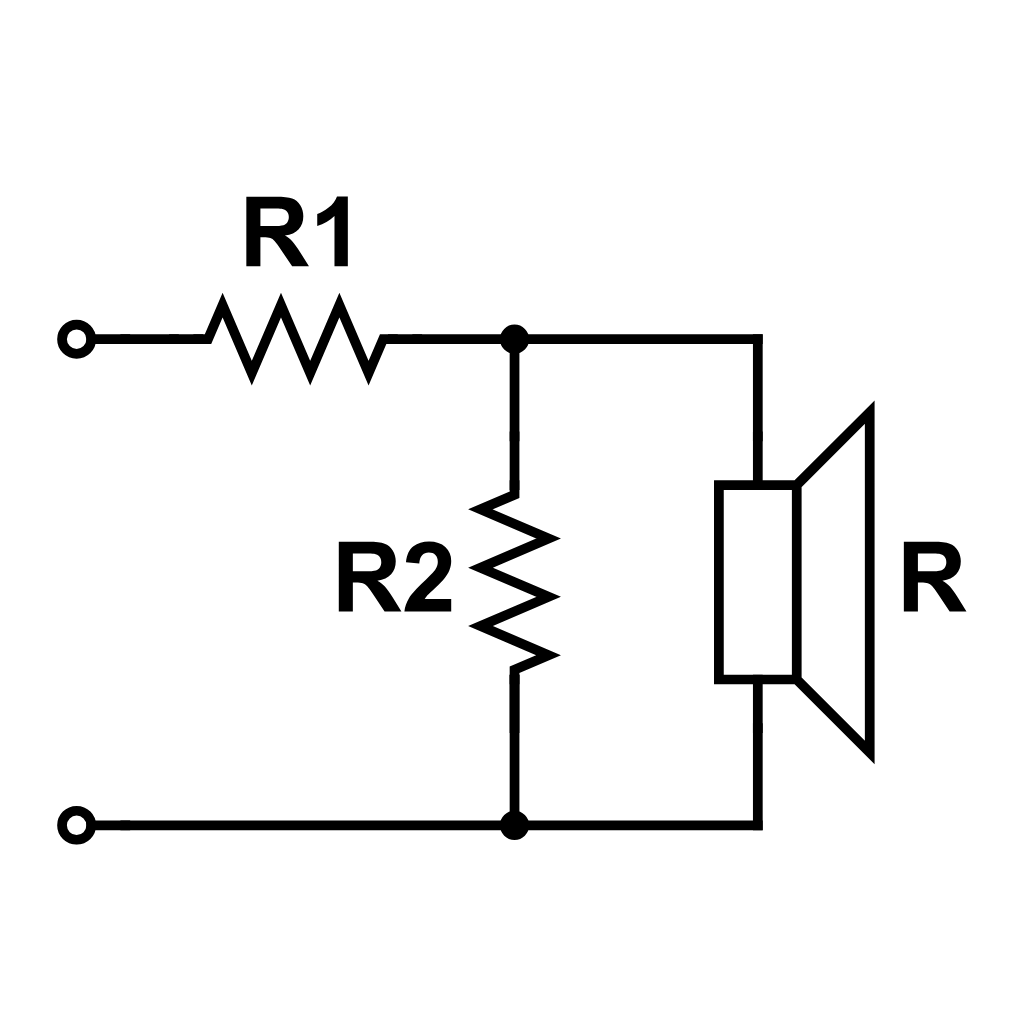
Skema rangkaian atenuator L-Pad - konfigurasi dua resistor untuk penyesuaian level driver
Atenuator L-Pad sangat penting ketika sensitivitas tweeter melebihi sensitivitas woofer, sebuah skenario umum dalam desain high-fidelity. Tanpa atenuasi, output frekuensi tinggi akan mendominasi sistem dan merusak keseimbangan tonal. Berbeda dengan resistor seri sederhana - yang mengubah impedansi driver dan menggeser titik crossover - L-Pad menggunakan konfigurasi dua resistor. Desain ini mengurangi level sinyal yang mencapai tweeter sambil mempertahankan beban impedansi konstan bagi filter crossover. Hal ini memastikan frekuensi crossover tetap stabil sekaligus membawa level driver ke dalam keselarasan sonik yang sempurna.
Mensimulasikan Performa Filter di Speaker Box Lite
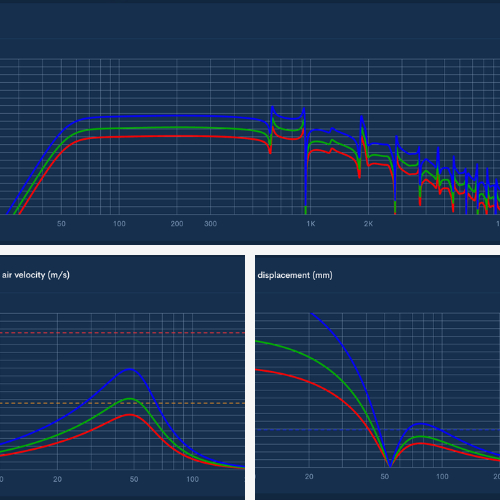
Speaker Box Lite menyederhanakan proses desain crossover dengan memungkinkan pembuatan prototipe virtual. Mulailah dengan memasukkan parameter Thiele-Small driver Anda untuk menetapkan dasar yang akurat. Di dalam modul crossover, Anda dapat memilih jenis filter tertentu - termasuk jaringan LF/HF standar atau sirkuit korektif seperti jaringan Zobel. Aplikasi ini menghasilkan visualisasi real-time dari fungsi transfer dan kurva impedansi yang dihasilkan. Dengan menyesuaikan nilai komponen secara digital, Anda dapat menyempurnakan respons frekuensi dan memastikan stabilitas sebelum membeli perangkat keras. Pemodelan prediktif ini menghemat waktu dan sumber daya, menghasilkan sistem audio yang lebih terpoles dan profesional.
Kesimpulan - Mencapai Keseimbangan Sonik
Mencapai keseimbangan sonik yang sesungguhnya membutuhkan lebih dari sekadar pembagian frekuensi dasar. Meskipun filter LF dan HF menetapkan titik crossover dasar, rangkaian pembantu - seperti jaringan Zobel, filter notch, dan L-pad - memberikan penyempurnaan yang diperlukan untuk mencapai standar high-fidelity. Komponen-komponen ini bekerja dalam harmoni untuk menstabilkan impedansi dan menghaluskan ketidakteraturan respons. Untuk memastikan desain Anda terwujud dengan sempurna di dunia fisik, Speaker Box Lite menawarkan platform penting untuk pembuatan prototipe dan validasi desain yang akurat. Dengan mensimulasikan kombinasi filter yang kompleks ini secara digital, Anda dapat mencapai output yang profesional dan seimbang sekaligus menghindari proses trial-and-error yang mahal pada konstruksi manual.
Can you explain the height, width, and length of the port?
Can you please explain the height, width, and length of the port? I have changed the height of the port to different numbers but the 3d rendering does not show any changes. I don't understand. When I go to view the parts, none of the dimension change. What part of the port does height and width signify?