HF Crossover Design: Optimizing Tweeter Performance in Speaker Box Lite

Master the technical nuances of high-frequency filters, from managing component parasitic resistance to selecting the perfect alignment for your loudspeaker system.

Introduction to High-Frequency (HF) Filters in Audio Crossovers

A high-frequency (HF) filter - commonly known as a high-pass filter - serves as a critical gatekeeper in multi-way loudspeaker systems. Its fundamental role is to direct high-frequency signals to the tweeter while attenuating low-frequency energy that the driver is not designed to reproduce. This protection is vital; low frequencies carry significant power that can cause excessive diaphragm excursion, leading to mechanical failure or high levels of distortion. Speaker Box Lite simplifies these complex mathematical requirements, allowing DIY enthusiasts to calculate precise filter parameters easily and ensure their high-frequency drivers operate safely and efficiently.

Primary Benefits of HF Crossover Implementation

Implementing an HF crossover offers several technical and acoustic advantages that directly impact system performance:

  1. Improved Power Handling - By blocking high-energy low frequencies, the tweeter is protected from mechanical stress and overheating, significantly increasing its reliability.
  2. Reduced Intermodulation Distortion (IMD) - When a driver attempts to reproduce frequencies outside its linear range, it generates distortion that colors the audio. HF filters ensure the tweeter only handles frequencies it can reproduce cleanly.
  3. Optimized Polar Response - Proper filtering helps maintain a consistent radiation pattern at the crossover point, preventing "lobing" and ensuring a wider sweet spot.
  4. Enhanced Soundstage and Clarity - Isolating the high-frequency driver allows it to deliver transients with greater precision. This results in a more defined soundstage and a level of transparency that is impossible to achieve with a full-range signal.

The Impact of Real-World Parasitics: ESR and DCR

While mathematical models provide a solid foundation for crossover design, they often assume "ideal" components with zero internal resistance. In reality, every physical part introduces parasitic elements that can shift the filter's performance. Two critical factors are Equivalent Series Resistance (ESR) in capacitors and DC Resistance (DCR) in inductors. Failing to account for these variables results in a mismatch between simulation and the final physical build. Understanding these non-ideal characteristics is essential for ensuring that your crossover behaves as intended once it leaves the screen and enters the speaker cabinet.

The Importance of ESR for Series Capacitors

Equivalent Series Resistance (ESR) represents the internal ohmic losses within a capacitor. In a high-frequency crossover, the capacitor sits directly in the series signal path, making its ESR a critical factor for performance. High ESR values degrade the filter's Q-factor, leading to a "softer" roll-off and less precise frequency control than the mathematical ideal suggests.

Beyond frequency response, ESR acts as a resistor in series with the driver, causing unintended signal attenuation. This resistance also converts electrical energy into heat - a significant concern in high-power applications where thermal stability is necessary to maintain consistent sound quality and component longevity.


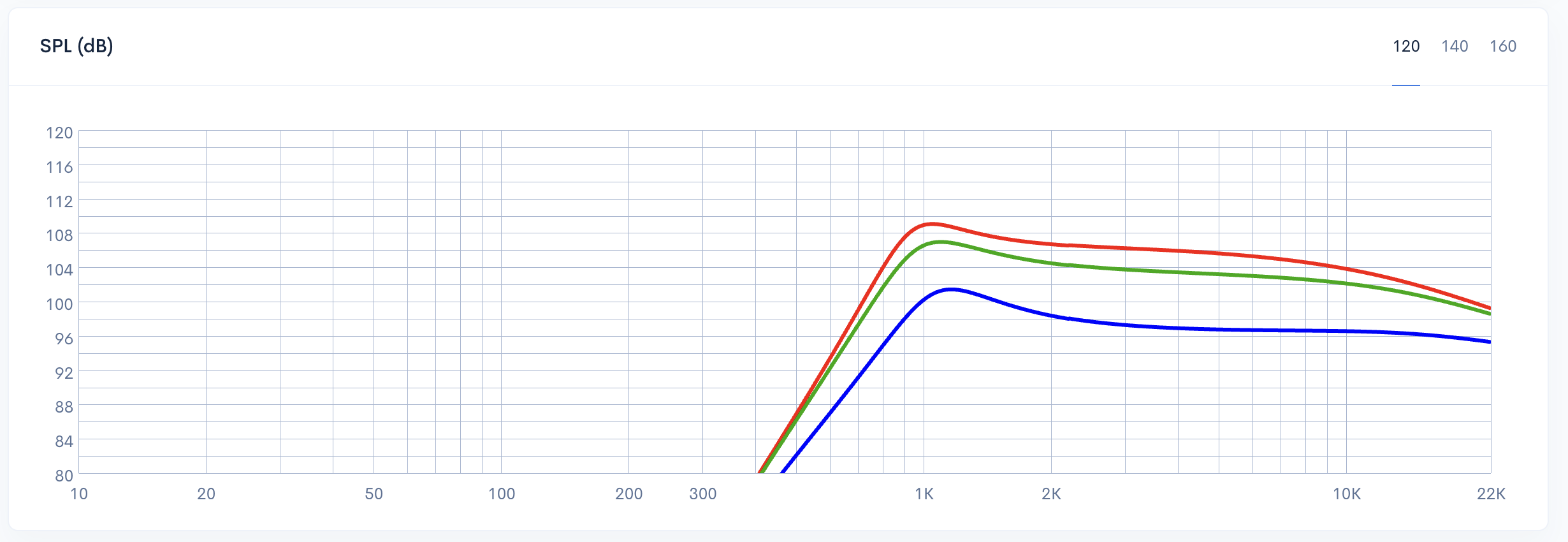
SPL response impact of capacitor ESR values - 0.2 Ohms (red), 2 Ohms (green), and 10 Ohms (blue)

The Role of DCR in Shunt Inductances

DC Resistance (DCR) is the internal resistance of the inductor's copper winding. In HF filters, the inductor acts as a shunt component to ground. Its DCR directly affects the filter's damping and the impedance profile seen by the amplifier. Low DCR is ideal for maintaining the intended roll-off slope, though it requires thicker wire and larger component footprints. High DCR values introduce losses that can soften the filter's response or - if sufficiently high - effectively disconnect the shunt branch from the circuit. This makes balancing DCR and physical size essential for crossover precision.


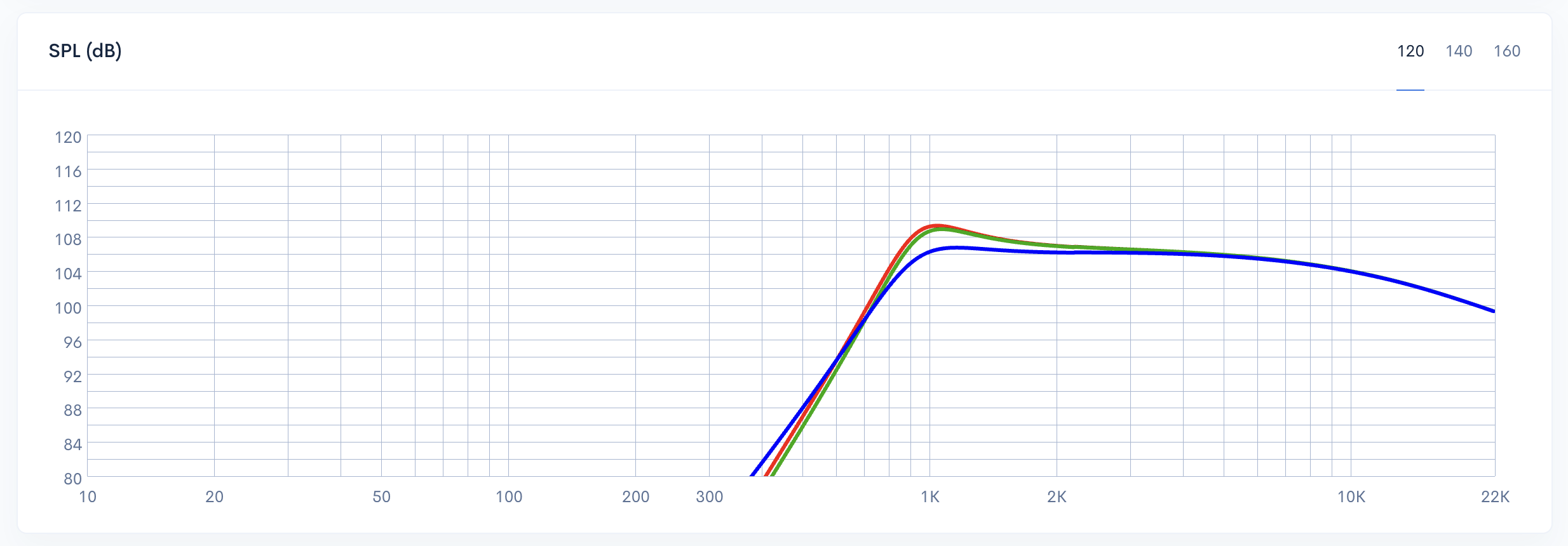
Impact of shunt inductor DCR on HF crossover SPL response - 0.2 Ohms (red), 2 Ohms (green), and 1000 Ohms (blue)

Reference Data: Average ESR and DCR Values for Components

To achieve high precision in Speaker Box Lite simulations, it is essential to input realistic parasitic values. Use the following reference data for ESR and DCR as a baseline when specific manufacturer datasheets are unavailable:

Capacitors (ESR Comparison):

  1. Electrolytic: Often utilized in high-capacity shunt circuits for cost efficiency. These exhibit higher Equivalent Series Resistance, generally ranging from 0.5 to 2.0 Ohms.
  2. Polypropylene or Film: The gold standard for high-fidelity audio, offering superior stability and extremely low ESR - often less than 0.1 Ohms.
  3. Ceramic (MLCC): Occasionally found in impedance compensation or bypass circuits, these offer very low ESR values - typically between 0.01 and 0.2 Ohms - though they are less common in primary LF signal paths due to voltage sensitivity.

Inductors (DCR Comparison):

  1. Air Core: Prized for their lack of magnetic saturation. However, they require more wire to reach high inductance values, resulting in a higher Direct Current Resistance (DCR).
  2. Ferrite or Iron Core: Utilizing a magnetic core allows for high inductance with fewer wire turns. This results in much lower DCR - preserving system sensitivity - though designers must account for the risk of core saturation at high power levels.

Step-by-Step: Using the HF Crossover Tool in Speaker Box Lite

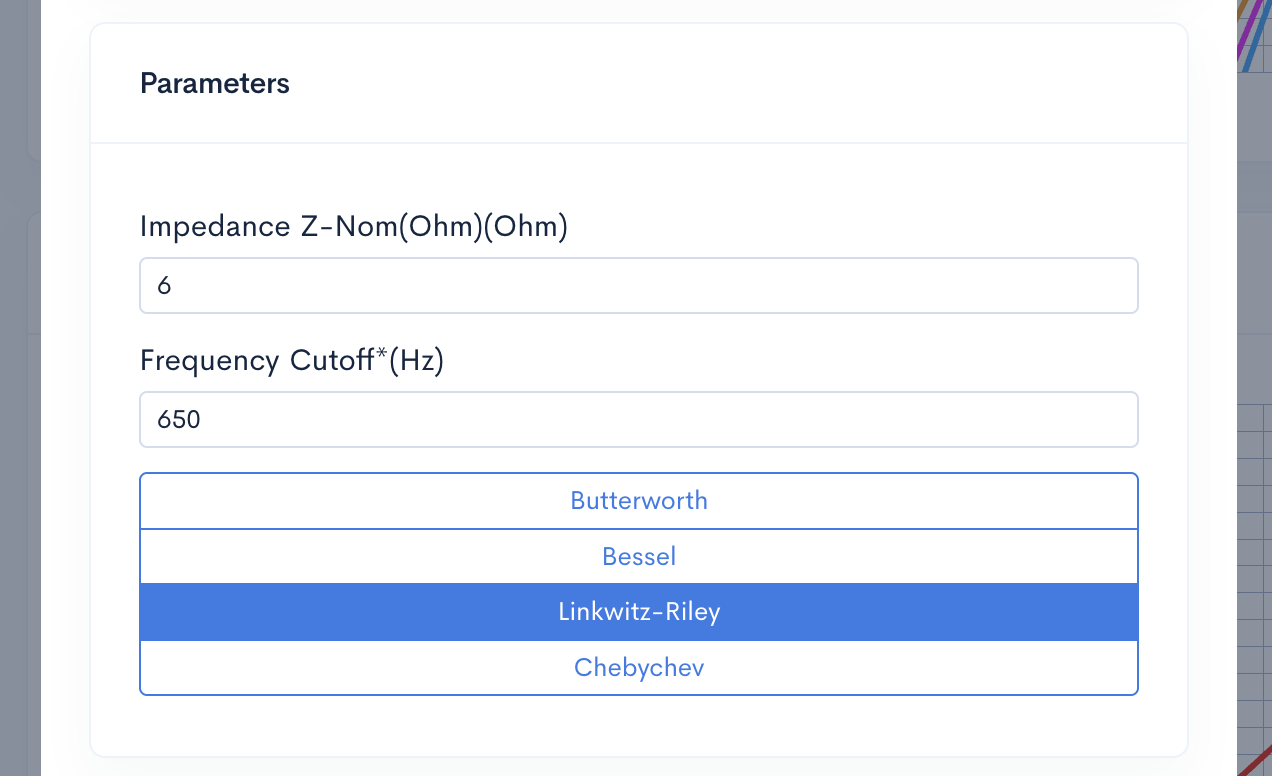
To begin designing your crossover, go to the Network tab in your Speaker Box Lite project. First, enable the External network option to activate the circuit simulation engine. Within the Filter section, you will find a pre-added High Pass item. Mobile app users can tap the item to adjust settings, while WEB users should click the ... button next to it. This opens the HF parameters screen, where you define the driver impedance, cutoff frequency, and your preferred alignment model.

Selecting the Filter Order and Roll-off Slope

In Speaker Box Lite, you can select a filter order from 1st to 6th to define the attenuation rate. Raising the order increases the complexity of the crossover network - each additional step requires another passive component (either an inductor or capacitor). The resulting roll-off slopes are:

  1. 1st Order: 6 dB/octave (1 component)
  2. 2nd Order: 12 dB/octave (2 components)
  3. 3rd Order: 18 dB/octave (3 components)
  4. 4th Order: 24 dB/octave (4 components)
  5. 5th Order: 30 dB/octave (5 components)
  6. 6th Order: 36 dB/octave (6 components)

While steeper slopes provide better driver isolation, they demand more precise tuning and increase the physical part count of your system.


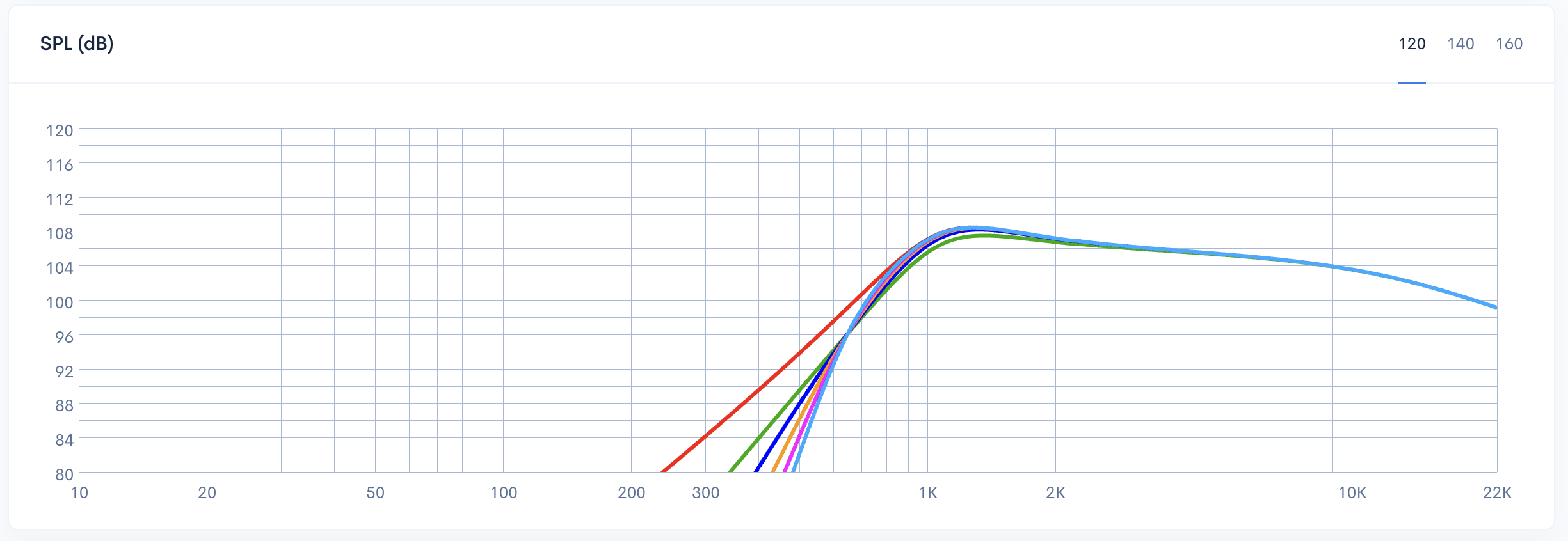
Comparison of high-pass filter roll-off slopes from 1st-5th order
1st-order high-pass filter schematic - 6 dB/octave slope
2nd-order high-pass crossover schematic with 12 dB/octave roll-off
3rd order High Pass Filter (HPF) schematic diagram - 18 dB per octave attenuation
4th order high-pass crossover network schematic - 24 dB/octave attenuation slope
5th order high-pass filter schematic circuit - 30 dB/octave roll-off slope
6th-order high-pass crossover schematic - 36 dB/octave slope

Input Fields: Impedance and Cutoff Frequency

The setup begins with two primary inputs: Impedance (driver) and Cutoff Frequency. To ensure precision, use the driver's actual measured impedance at the crossover frequency instead of its nominal 4 or 8 ohm rating. This is crucial because real-world driver impedance fluctuates across the frequency spectrum. The Cutoff Frequency marks the point where the filter begins to attenuate low frequencies. Accurate calibration here is essential for a smooth hand-off between drivers and for maintaining a balanced, cohesive frequency response throughout the audio system.


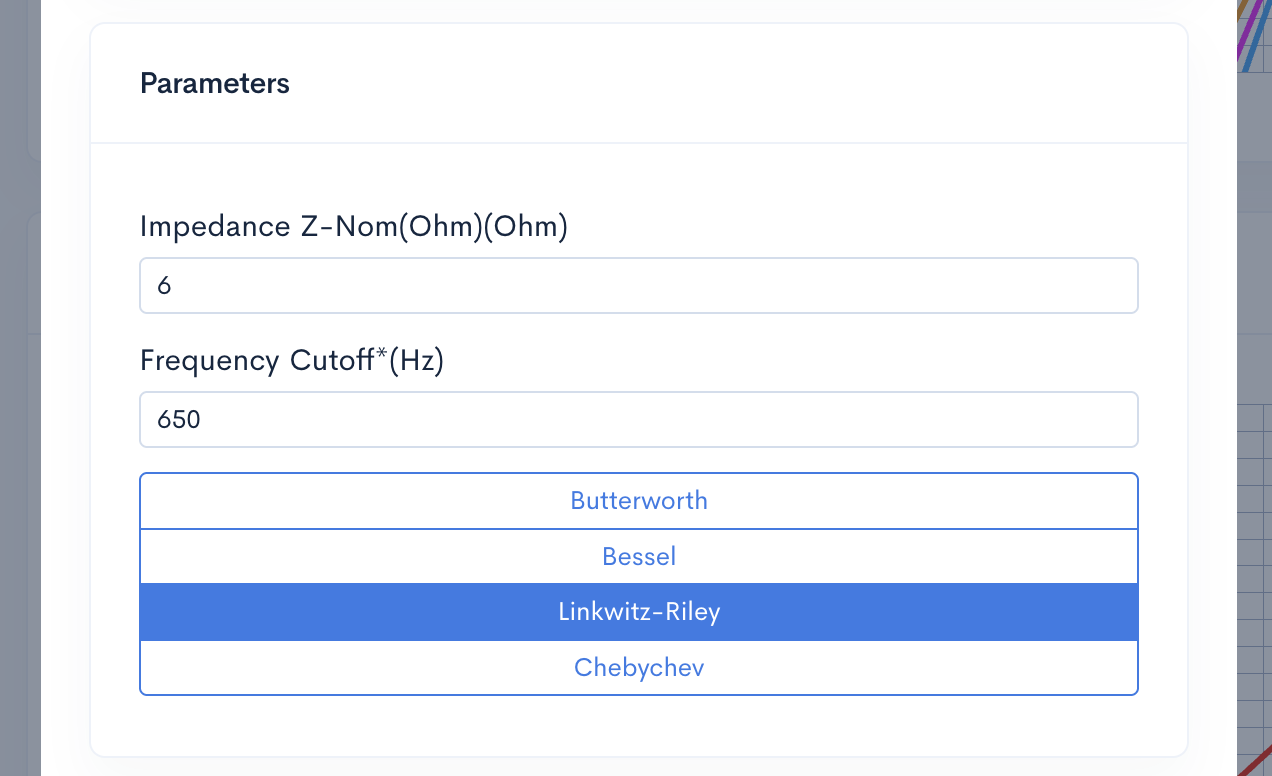
HF crossover configuration - Driver impedance and cutoff frequency inputs

Available Filter Alignments and Their Characteristics

Choosing the correct mathematical alignment in Speaker Box Lite is essential for defining the sonic character and transition behavior of your high-frequency driver. Each alignment offers a unique trade-off between frequency magnitude and phase accuracy:

  1. Butterworth: Often called the 'maximally flat' filter, it provides the flattest possible response in the passband. It is a versatile choice for HF filtering, though it exhibits moderate ringing in the time domain.
  2. Bessel: Optimized for the best group delay and linear phase response. While it has the softest initial roll-off, it is preferred by audiophiles for its superior transient reproduction and minimal phase distortion.
  3. Linkwitz-Riley: The standard for high-order crossovers, specifically 24dB/octave. Unlike others, it is -6dB at the cutoff frequency, ensuring a flat summed magnitude response when paired with a matching low-pass filter.
  4. Chebychev: This alignment provides the steepest roll-off to protect sensitive drivers. However, this comes at the cost of ripple within the passband, making it suitable for applications where rapid attenuation is prioritized over absolute flatness.


Available 2nd order Butterworth, Bessel, Linkwitz-Riley, and Chebychev filter alignments
Available 3rd order Butterworth, and Bessel filter alignments
Available 4th order Butterworth, Bessel, Linkwitz-Riley, Legendre and Gaussian filter alignments
Available 5th order Butterworth filter alignment
Available 6th order Linkwitz-Riley filter alignment

Calculated L and C Component Values

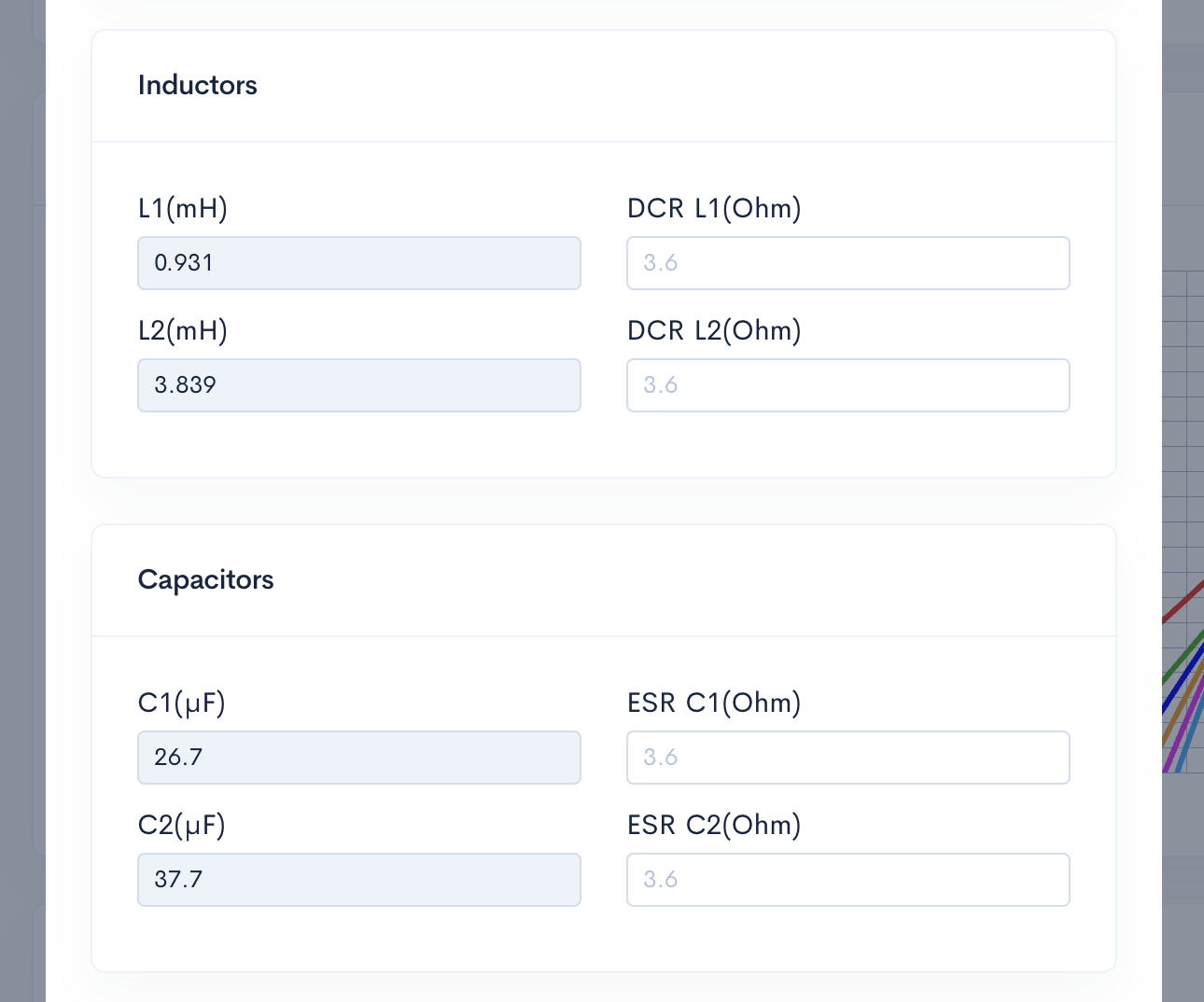
After specifying the driver Impedance and desired Cutoff Frequency, Speaker Box Lite automatically calculates the theoretical L (inductance) and C (capacitance) values for your selected alignment. The count of components - such as L1, C1, or L2 - adjusts dynamically based on the chosen filter order. For high-precision simulation, the interface includes dedicated fields for parasitic resistance: ESR for each capacitor and DCR for each inductor. By default, these are set to 0 Ohms and 0.2 Ohms, respectively, allowing you to refine the model for real-world accuracy.


Simulation Accuracy: Simple vs. Complex Models

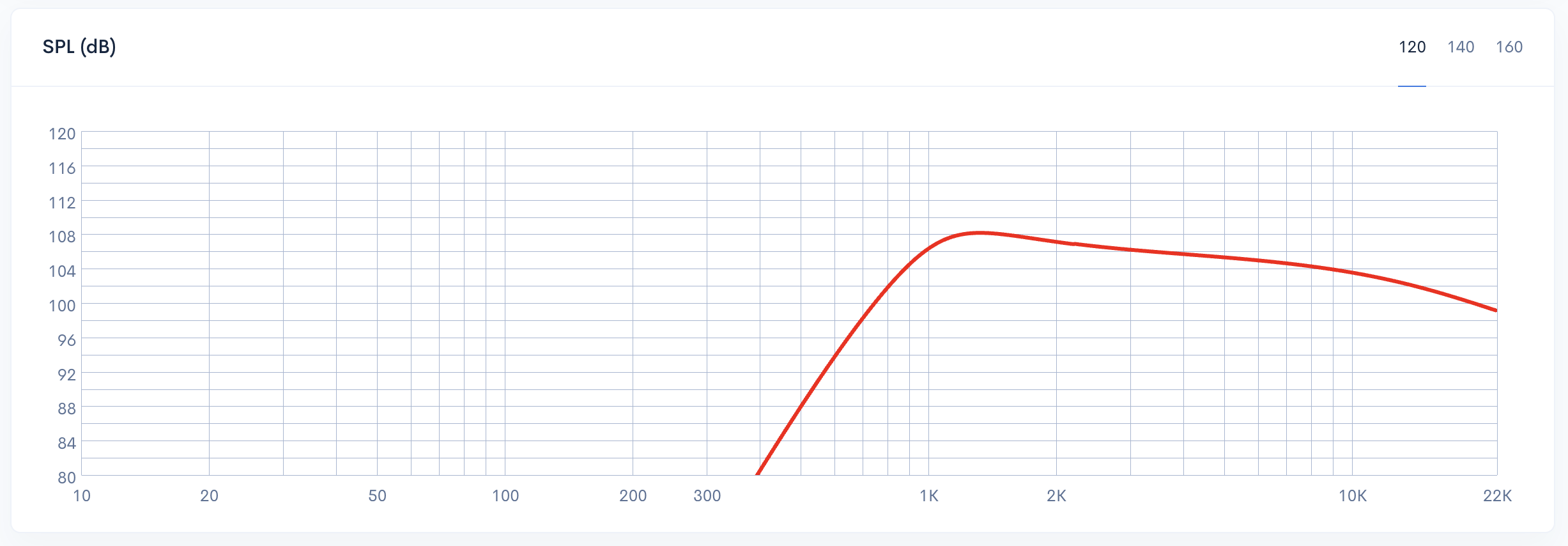
Within Speaker Box Lite, the choice between Simple and Complex models defines your simulation's detail level. Simple models are optimized for rapid prototyping, using ideal transfer functions and SPL output to generate a quick - draft - of filter behavior. In contrast, Complex models deliver laboratory-grade accuracy by calculating real-world variables. These encompass the driver's full impedance curve and parasitic elements like ESR and DCR. By including these physical factors, the Complex model ensures that the simulated response matches the actual measured performance of your completed crossover.


SPL response graph in Simple mode - ideal transfer function without ESR and DCR influence
SPL response graph in Complex mode showing the influence of ESR and DCR parasitic resistance

Advanced Control: Implementing Custom L and C Elements

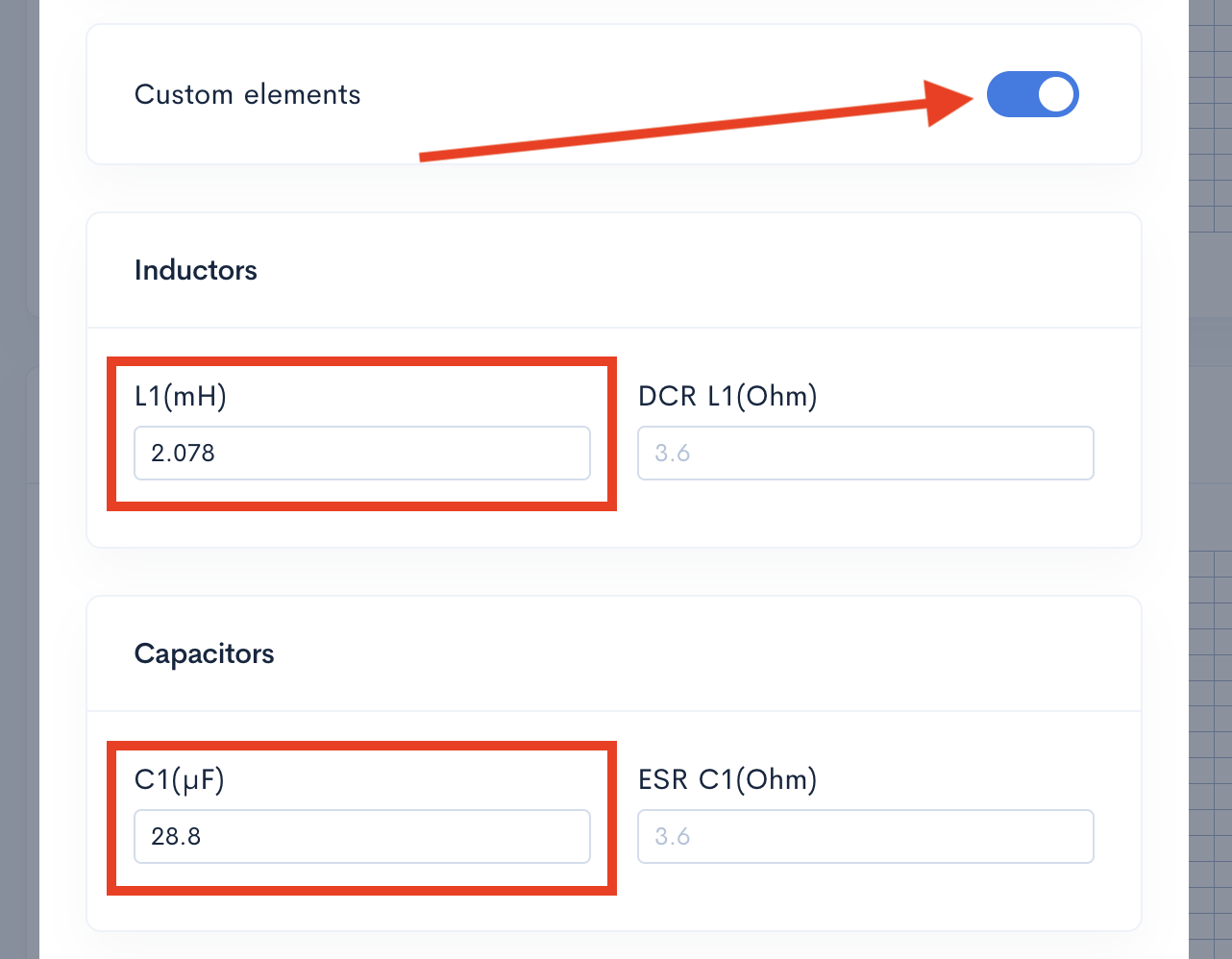
While Speaker Box Lite offers precise theoretical alignments, real-world engineering often requires greater flexibility. By activating the "Custom elements" toggle, you gain full manual control over the filter network. This mode allows you to override calculated values and enter specific Inductance (L) and Capacitance (C) values directly. This is particularly useful when adapting your design to "off-the-shelf" components that may deviate from ideal calculations. Whether fine-tuning the response or utilizing existing inventory, Custom mode provides the versatility needed for professional-grade optimization.


Custom elements mode for manual entry of L and C parameters

Conclusion: Integrating HF Filters for Superior Sound

Integrating a high-frequency filter is more than a mathematical exercise - it is the foundation for protecting your drivers and achieving acoustic clarity. By combining theoretical alignment principles with the simulation power of Speaker Box Lite, you can refine your designs with total confidence. We recommend an iterative approach: start with simple models to establish your target response, then transition to complex simulations to account for real-world ESR and DCR variables. This workflow ensures your final build achieves the perfect balance of thermal stability and high-fidelity performance.


Bagikan: